Japandi in Australian Homes: The Design Style That Actually Fits Our Way of Living
Japandi looks Instagram-perfect in a Kyoto teahouse. Making it work in a Melbourne apartment or a Sydney townhouse is a different craft. Here's what actually translates.

Every few years an interior style crosses over from design magazines to everyday Australian homes. Mid-century modern did it in the 2010s. Scandinavian did it in the late 2000s. The one that's landing now — quietly, in apartments in Fitzroy and townhouses in Bondi — is Japandi.
Japandi is a shorthand for the meeting point between Japanese design (restraint, natural materials, negative space) and Scandinavian design (warm minimalism, functional beauty, honest craftsmanship). It sounds academic, but the reason it works in Australian homes is very practical: our light, our climate, and the way we actually live.
Why Japandi fits Australia specifically
Three reasons this style has legs beyond a trend cycle:
- Our light is generous. Australian homes get more direct sun than most European or Japanese houses. Japandi's restrained palette — warm whites, natural timbers, soft greys — reads beautifully in strong daylight where more decorated styles (French provincial, industrial, Hollywood glam) start to look busy or dated.
- Our floor plans are open. Modern Australian apartments and townhouses lean toward open-plan living/dining/kitchen. Japandi's discipline about negative space and low horizontal lines helps these open plans read as one calm room rather than three fighting for attention.
- Our lifestyle is casual. Australians live in their homes barefoot, with tea, with dogs, with people dropping in for dinner. Japandi's emphasis on comfort and use (not display) matches how we actually inhabit a room. Every piece has to earn its place by being sat on, walked past, opened, closed.
The five principles, translated for Australian homes
1. One anchor per room, not five features
Japandi doesn't tolerate visual competition. Each room should have one piece that anchors it — a bed frame, a coffee table, a dining table — and the rest of the room composes around that. In practice: don't buy a statement sofa and a statement rug and statement lighting and statement art. Choose one. Let the others recede.
2. Warm timber over cool timber
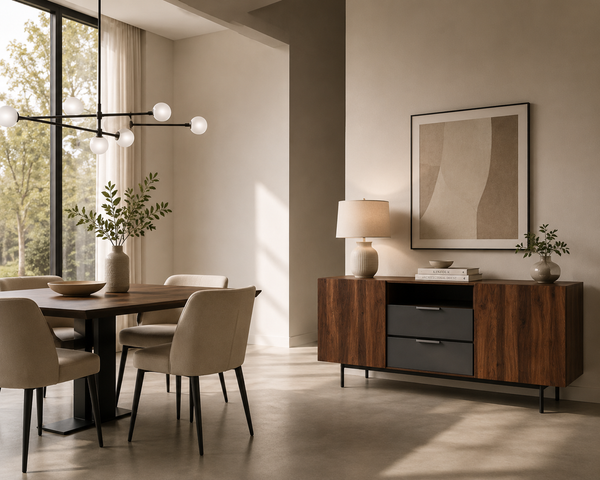
The most common mistake we see is treating Japandi as "Scandinavian style plus black accents." That's a different (colder) look. True Japandi leans on warm timber tones: honey oak, walnut, chestnut, natural ash. Cool greys and beach-house pale timbers work in Scandinavian style but read as clinical in Australian light.
Our Living Room collection uses timber-inspired finishes across walnut, oak and charcoal specifically for this reason — they hold their warmth under Australian sun.
3. Low horizontal lines
Japanese design famously sits close to the floor. You don't need to go full tatami, but the principle translates: lower silhouettes make a room feel larger and calmer. Look for:
- Bed frames with lower headboards (100–120cm) rather than towering wingbacks
- TV units around 45cm tall, not 60cm
- Coffee tables at 38–42cm — a touch lower than the sofa cushion
- Sofas without excessively tall backs
4. Negative space is a design decision
The urge to fill every wall and every shelf is the enemy of Japandi. A cabinet with three thoughtfully placed objects reads as considered. The same cabinet crowded with twenty objects reads as messy — even if each object is beautiful. Every empty surface is doing visual work; leave it alone.
5. Real materials, honestly used
Japandi values how a material behaves — how oak grain shifts across a drawer front, how fabric drapes on an upholstered headboard, how metal catches the light on a table leg. It doesn't love decorated surfaces (heavy carving, printed panels, plastic wood-look laminate) that pretend to be something they're not. When choosing furniture, look for pieces where the material tells you what it is.
A Japandi living room, piece by piece
If you're starting from scratch in a Melbourne or Sydney apartment, here's a proven Japandi living room formula:
- Anchor: a walnut or oak coffee table, low and rectangular. The Bonito Coffee Table in Columbian Walnut is deliberately proportioned for this.
- Storage: one long TV unit or sideboard in the same timber family. Not two separate pieces — one long horizontal line.
- Seating: a mid-tone linen or bouclé sofa, not too tall in the back. Cream, mushroom, or warm grey.
- Rug: natural jute, wool, or a very subtle geometric — no bold pattern.
- Lighting: one warm-toned floor lamp (paper shade, natural fibre) plus overhead. Skip cool-white bulbs.
- Accents: two or three ceramic objects (vessels, bowls), one framed piece of art, one plant. That's the whole styling brief.
A Japandi bedroom, piece by piece
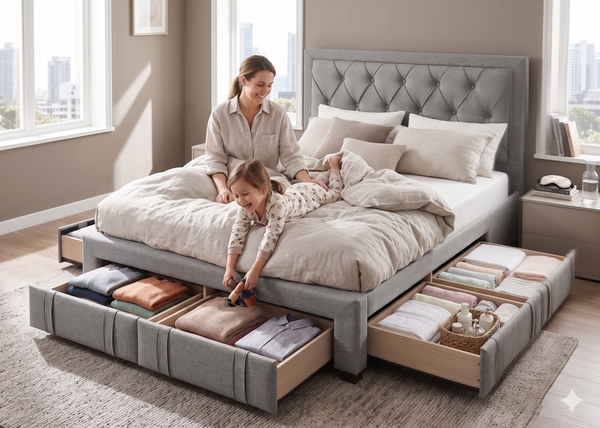
- Bed frame: upholstered in linen, oatmeal or soft grey, with a low channel-tufted or plain headboard. Height under 120cm.
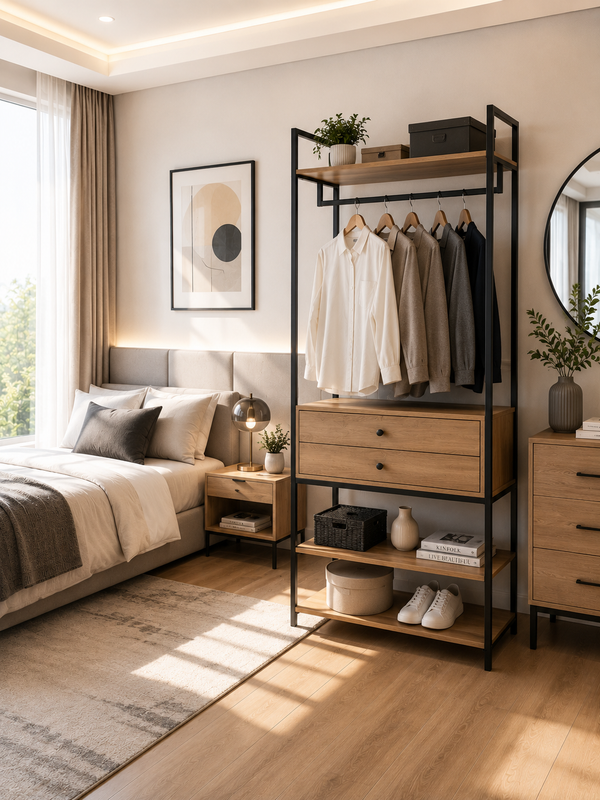
- Bedside tables: matching pair, timber, no more than 50cm tall.
- Chest of drawers: in the same timber family as the bedsides.
- Bedding: white or soft cream linen sheets. Don't over-layer — one quilt, two euro pillows, done.
- Scent: a reed diffuser with a calm woody or floral note — one of our Udara reed diffusers in Vienna Forest or White Tea works well here.
What Japandi is not
Three things people get wrong when they try to "do Japandi":
- It's not black and white. That's Scandi noir. Japandi has warmth in every scheme — cream, oak, walnut, sage green, muted terracotta.
- It's not minimalism for its own sake. An empty room isn't Japandi; a considered room is. The point is intention, not scarcity.
- It's not one-note. Contrast — a rough ceramic bowl on a smooth timber table, a chunky wool rug under a slim steel frame — is what stops the style from feeling flat.
Start small
You don't need to redo an entire home. Pick one room. Get the anchor right, get the timber warmth right, edit the styling down to three or four honest objects. The rest will follow the next time you replace a piece.
If you'd like a starting point, our Build Your Set tool lets you compose a Living Room package (coffee table + TV unit + cabinet in matched finishes) with a bundle discount. It's the fastest way to get the Japandi warm-timber base into a room without piecing it together across visits.